Hindu Mindset

Friday, January 16, 2015

Hindus are naive, apathetic; they lack national character and spirit.

By Greet C. Sharma Ph.D. Hindus are naive, apathetic; they lack national character and spirit.

http://indiatribune.com/index.php?option=com_content&view=article&id=9160:hindus-are-naive-apathetic-they-lack-national-character-and-spirit-&catid=30:opinion&Itemid=460


We all grew up hearing back home that it makes no difference as to who rules us. Apathy among Hindus is one of the most complex and fascinating phenomenons.  Hindus show utter apathy when it comes to actual karma, in spite of constant references to scriptures and exposure to sermons. Hindu tendency is to act individualistically. Apathy becomes even more visible when dealing with people of other religions, missionaries, terrorists, and their agendas resulting in demographic manipulations to change India’s national character, as well as Hindu destiny. As a consequence, Hindus are stereotyped as meek, weak, coward, gullible and never a “force.”

In Guyana when a local criminal needs money he turns around and robs the nearest Indian. In Zambia, average murder of an Indian is one  per week. Locals know that Indians are hard working, entrepreneurial and have money. This “sitting duck”  syndrome is pervasive in most countries where Hindus have settled, whether Jersey City in the USA, Suva in Fiji, Dhaka in Bangladesh, Sindh  in Pakistan, or Aligarh in India.

The sole factor that defines such a dynamics is Hindu apathy. It is unique except it has only one parallel that is,  Jewish passivity in Germany just before the holocaust. Rev. Martin Niemoller (1937) wrote:

First they came for the Jews and I did not speak out because I was not a Jew.
Then they came for the Communists and I did not speak out because I was not a Communist.
Then they came for the trade unionists and I did not speak out as I was not a trade unionist.
Then they came for me and there was no one left to speak out for me.


The extremes of apathy are indifference, depression, immobility, paralysis, desperation, abandonment and brain atrophy.  In clinical terms, it is indicative of serious disease revealing mental disorder or brain damage. In mental health, the apathetic individual has no energy, talks inaudible, moves very slowly, is uninvolved, and avoids any interaction.  However, the worst character defect of an apathetic person is taking his words as a substitute for action.

Apathy is not stoicism, not spirituality, not freedom from emotions, nor an effective buffer from negative consequences.  It is about living by default, and letting others control your destiny.  It is about living in illusion that one cannot change the ultimate outcome or destiny. Selfish, self-centered, opportunistic orientation, tolerating unfairness and corruption, and patronizing offenders instead of confronting them are character traits, which have become Hindu hallmark. Such mindset is contrary to the Bhagavad-Gita and the cumulative wisdom of  Dharma. It is abandoning everything that should matter, whether motherland, culture, identity, family, or one’s future.  It is allowing others, regardless of their “motives” to make decisions for you.

The collective history of any nation offers a good view of the past to figure out one’s national character. However, it works well only if history is written objectively and not driven by politics.  In the case of Hindus of Bharatvarsha, its history has been written, dictated, edited, and marketed by other than Hindus, whose agenda has always been seeking total control, monopoly and intolerance for differences.

Hindu apathy and passivity have made it possible for one of the most original civilizations to be defined by others, for others, paid by Hindus and sold to the world.  It is the holocaust of the Hindu’s in the making.  The corporate world has taken liberties to commercialize Hindu religious symbols to market sandals, toilet seats, and other offensive items.  Unfortunately, the reaction from Hindus, if any, has been minimal.

Compare Hindu behavior with Sikhs, Muslims, Christians, British, Israelis, and Pakistanis, but only the Hindu apathy wins the distinction. The irony is we do not see the ground realities, Muslims have 56 countries, Christians 7, Jews 1, however, Hindus still have no country to call home.

Psychologically speaking, one behaves according to one’s thinking, which is a combination of concepts, values, and beliefs. A Hindu wakes up praying for the well being of the entire creation, practices non-injury, believes that all religions are the same. They are beautiful ideals for ideals all mankind to pursue. Ironically Abrahamnic religions believe in converting, violence, and Jihad to seek a religious monopoly. Hindus naivety and one-sided idealism leaves them vulnerable incapable to confront reality, adversity, and danger.

Apathy thus unwittingly serves the purpose of keeping Hinduism glued in an imaginary cocoon, even though it’s stagnating in a rigor mortis. Hindu scriptures are rich with inspiration, defining the duty for the nation as well as promoting a pragmatic life. The Hindu pursuit of nirvana, “detachment,” and Bhakti Yoga inherently causes ineffective handling of inter-religious politics. Hindus need leaders and there is an abundance to name a few, Swami Vivekananda, Subhas Chandra Bose, Bhagat Singh Azam, and Sardar Vallabh Bhai Patel.

The opposite of apathy is action, resilience, determination, direction, pride and clarity of thinking. Knowing one’s place in the scheme of life, and being an important player in the worldly drama is not a luxury but a necessity.

Labels: ,

Wednesday, April 17, 2013

INDIA- WHY NATIONAL CHARACTER MATTERS

Neil Kulkarni: INDIA- WHY NATIONAL CHARACTER MATTERS

http://neilkulkarniblog.blogspot.ca/2013/04/17  India-why-national-character-matters.html

India. Bewitching and frustrating, dynamic and static, systematic and disorganised, brilliant and banal. In short, India is a nesting ground for the coexistence of contradictions. Or are these contradictions only at the surface? Somewhere, do the seemingly incongruous realities of India, each of which has an undeniable part to play in forming a harmonious whole, meet? Or fuse together?
I have no answer. But I hope you get the drift. Let us consider some examples.

First, let us take politics, which, like cricket and films, is a formidable unifying as well as divisive force in this country. Indians, myself included, often complain. “What democracy?” “Ours is a banana republic.” “Those with contacts go unscathed too often.” 

However, though there may be some veracity in the complaints of frustrated citizens, the fact remains that India is very much a democracy. Ramachandra Guha has written that India is approximately fifty percent democratic and eighty percent united. I find in the writings of this outstanding historian more than a speck of truth. If we accept that India is fifty percent democratic, it follows that though miles away from a model state, India is not a disintegrated, hopelessly fragmented and antagonistic bunch of perpetually warring states, each too small, too dependent to lead an isolated existence. And if anything, we should be thankful that the worst did not happen.

After independence, there arose several occasions on which international observers and correspondents, skeptical as they were, raised questions about the survival of Indian democracy. Doubts were also raised about the survival of India as a nation-state. But the Republic has weathered these storms, and it appears that most citizens have totally accepted India’s democratic institutions, defective though they are.

Of course, this acceptance does not mean passivity. The Anna Hazare-led movement for a Lokpal Bill drew the masses out of their torpor. The brutal gang-rape of a young woman in Delhi saw an unprecedented manifestation of collective rage, impotent though it was. Collectively, though, that rage, far from remaining helpless, became tremendously potent and led the government to change the status quo, though not very radically.

In addition, though illiberal tendencies repeatedly come to the fore in politics (consider the arrest of cartoonist Aseem Trivedi for the offence of ‘sedition’, an archaic statute of our antiquated lawbooks); there is an acceptance of criticism. The cartoonist R. K. Laxman, who started his career before independence, thrived for nearly sixty years in association with The Times of India, and drew daily for the paper till 2003; his long career interrupted by India’s experiment with authoritarian rule, the Emergency. Surely a cartoonist as direct and sardonic as Laxman would not have blossomed in regimes like China, the former USSR or Egypt.

To take one more example, in spite of the obvious flaws in India’s Public Distribution System (PDS), food distribution has remained steady enough to prevent famine in India. For seventy years, since the tragic Bengal famine of 1943, no mass starvation has been reported to happen. And though starvation deaths are sometimes reported and a large proportion of children are malnourished, the situation is still a whole lot better, and more encouraging, than at independence. Food security has been achieved in foodgrains, and agricultural imports now comprise a much smaller proportion of our total imports than in the 1960’s, when India lived ‘from shipload to shipload’ of imported wheat from the United States, under the constant threat of a famine.

Now, consider poverty, a social fact in India, which is far from being eradicated. What is encouraging is that since 1991, there has been a decline in the absolute number of poor in India, despite a significant growth in population. Of course, the definition of a ‘poor’ person has come under fire, but it can be said with some certitude that on an average, the socio-economic conditions of the Indian populace have noticeably improved over the last two decades. The poverty ratio, however, has not declined with the same rapidity as in China, South Korea, Indonesia or sub-Saharan Africa. The population is not an excuse in this matter, though the scale of poverty alleviation schemes must be greater. But then, one should ask the question: why is poverty eradication in India taking time?

I will propose here not an answer as such, but an explanation. The Indian poor have NEVER revolted violently. They have lived their lives with immense fortitude, braving life’s ups and downs, withstanding its blows. After 1947, with the breaking up of old social norms, they have become more assertive. They will not be duped as easily as they once were. They now stand up for their rights, as the burden of their identity based on accident of birth has now practically disappeared. (A disproportionately high percentage of poor belonged, and still belong, to socially marginalised communities: Scheduled Castes, Scheduled Tribes and Other Backward Classes.) But they have practically NEVER taken to arms, very unlike the poor in, say, Russia or France.

That may be either out of fear of vengeance by the rich; out of acceptance of life’s circumstances, no matter how good or bad they may be (we call it fatalism); or out of faith and conviction, that one day their lot will be better off (irrational faith); or out of aversion to violence (fearing the consequences). Could there be any other reason? I do not know. I intend to write more in this regard in future.
But whatever the reason may be, one cannot deny that the pacifism of the poor has lent Indian society a certain stability. The poor have also been rewarded for their patience, as Indians have seen in the last two decades. The benefit to the poor (poverty alleviation) might be accruing slowly, but things are moving. Indian society is not going backward. Nor is it static, although to those impatient for change/revolution it may seem static.

Even the poor, though they may not be getting materially better off in the short run, live in contentment.

Indeed, we often observe that the rich in India, especially in the post-liberalisation period, desire for more and more materially; indeed, the more we get, the more we seem to want. Our seemingly insatiable desire for wealth has never yet been quenched, nor is it ever likely to be, given the psychological chain of desires with its origin in the wavering, weak human mind, which only gets weaker when money or material success is involved.

On the contrary, the poor seem to be making the best of what they have. They may not be financially successful, but adversity makes them stronger. Adversity increases their desire for their betterment. We have a lot to learn from them. Further, some poor people have totally accepted their lot and are living life with what they have, contentedly at that. Such an attitude my not help them get very far in life, but it certainly helps to look at the bright side of situations. Perhaps the better-off in India have plenty to learn from those who have conquered or accepted adversity.

In conclusion, what constitutes the spirit of India? Does the acceptance of imperfections define India? Perhaps.

It would be appropriate to end by mentioning the Hofstede Model, constructed by the Dutch anthropologist Geert Hofstede, to look into national and organisational-level cultural differences. The Hofstede survey ranks entities on five parameters: Power Distance, Individualism, Masculinity, Uncertainty Avoidance and Long-term Orientation. The outcomes reveal that India scores weak on uncertainty avoidance and high on long-term orientation, unlike many Western nations, which score strong on uncertainty avoidance and low on long-term orientation.

These two traits of Indian society as a whole, that is; first, its acceptance of uncertainties and imperfections: and second, its emphasis on distant rewards rather than instant gratification, do hold good, excluding individual exceptions, of course. And these traits have the potential to give great strength to Indians as a people.

From these traits we can develop sustainability and disaster management, both of which are likely to be critical preconditions to lasting satisfaction and the long-term amelioration of humanity.

India, if it can draw into its distinctive national character, has a lot to offer the comity of nations, a lot more than it is bringing to the table today. And if not in our lifetimes, then in a few generations, the dreams that we hold for this country and the world can be realised.

Let us pour our life-blood into achieving our potential, in the process bettering conditions for India, humanity and the planet!

Labels: ,

Wednesday, December 5, 2012

ORGANIZATIONAL REVITALIZATION: MAYA OR MOKSHA?(Excerpted)

{Excerpted and somewhat rephrased from an earlier publication as a chapter. The focus here is on organizations in India. It also holds implications for Indian/Hindu organizations outside of India.}

In the practice of management, organization development (revitalization of organizations) has come to be recognized as a systematic and planned approach to improving organizational competence and effectiveness. It seeks to align organizational results with its purposes, and overcome and/or avoid decay and senility.

While the techniques of Organization Development (OD) emerged in the USA in the 1950s, and are widely utilized in the developed countries of the west. They have been used to a much lesser extent, in the developing countries where the need for synergistic, healthy and productive organizations is more urgent and critical. Increasingly scholars and practitioners have called for OD to attune itself to be applicable around the globe (Brown 1988; Kiggundu, 1990; Srinivas, 1990).

This paper seeks to delineate the issue of the transferability of OD technology to developing countries for energizing their organizations. Specifically, this paper explores whether an indigenous approach to OD is feasible in the developing but ancient culture-nation of India. While some of its large organizations have lately developed into world class organizations, many continue to hold tremendous unrealized potential for improvements in productivity as well as in raising the quality of work life of their human resources (Kanungo and Misra, 1985; Mendonca and Kanungo, 1990). It has a unique cultural heritage that dates back to thousands of years, and it continues to have a significant impact on the day-to-day life of its population. Whether this cultural heritage supports organizational rot or revitalization and whether a unique and culture-sensitive approach to organizational renewal is possible are some of the questions posed in this paper.

APPLICATION OUTSIDE NORTH AMERICA

Broadly defined, OD includes almost any technique, policy or managerial practice used in a deliberate attempt to change individual behavior, organizational structure or technology for enhancing the accomplishment of the organization's objectives. Generally, in practice (and historically), only planned interventions for behavioral change are considered as OD. A significant attribute of OD is that it is a value based as opposed to a value neutral approach. The values (Golembiewski, 1991) including the methods used as well as the goals toward which OD interventions seek to move organizations are as follows:

1. It emphasizes and values openness, trust and collaborative effort.
2. It seeks simultaneously to meet the needs of individuals and of several levels of systems-small groups, large organizations, etc.
3. It is grounded in immediate experiences as they occur. This is reflected in the 'process analysis' of the personal and institutional forces acting on specific individuals and groups.
4. It emphasizes feelings and emotions, as well as ideas and concepts.
5. It attaches considerable importance to the individual's involvement and participation in an 'action research' sense-as subject, and object, as generator of data as well as responder to that.
6. It relies on group contexts for choice and change-to validate data, to develop and enforce norms, and to provide emotional support and identification.
7. It often begins with an emphasis on interaction, as creating norms for individual and group interaction, but may also include attempts to reinforce policies, procedures, and structures.

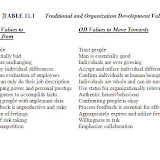
A description that predates the above by more than two decades (Tannenbaum and Davis, 1969), while not as comprehensive as the one above, supplies additional clarity by providing a contrast with the traditional values they seek to replace. This description is presented in Table 11.1 below. It suggests that where traditional values are strongly adhered to, and OD values are not subscribed to, organizational revitalization is most likely to be unsuccessful.


Tables 11


The following section explores whether the values prevailing in the Indian/Hindu culture are such that it is very unlikely that organizations would want to move towards vibrancy.

CREATING CULTURE SPECIFIC OD SYNERGY: A FOCUS ON INDIA

The Sanskrit word for culture is samskriti. The root sam means to synthesize. It is held that samskriti synthesizes or integrates the samskritas (those who possess samskriti) to the transcendental powers in the universe. In other words, samskriti is a current of human thought, sentiment and action which oversees superficial transactions and transitions (Panse, 1972). The thought follows a line of inquiry into the nature of one's own self and the self’s relation to the external world. Culture, according to Indian thought, is a function of people's cosmological concepts and philosophy of life, having to do with higher things in life, and with subtle things of the mind.

Perhaps a clearer conception of this notion of samskriti or culture is that of Sri Aurobindo (1971), a mystic and respected exponent of Indian philosophy and psychology. According to him, culture is the expression of a society's consciousness of life in terms of three aspects: (1) thoughts, ideals, upward will and aspirations; (2) creative self-expression of imagination and intelligence; and (3) outward and pragmatic formulation of the inspiring ideals under the practical constraints of time and space.

It may be noted that there are some western definitions of culture that are not too different. For example, Skinner (1964) suggested four aspects of culture: (a) assumptions and attitudes, (b) personal beliefs and aspirations, (c) interpersonal relationships, and (d) social structure. Assumptions and attitudes include how an individual views time, what will the future be, whether or not there is life after death, what an individual's duties and responsibilities are, and what he/she sees as his/her proper purpose in life. Personal beliefs and aspirations constitute an individual's views about right and wrong, sources of self-pride, fear and concern, hopes, and beliefs about the balance between a single person's importance vs. that of society's. Interpersonal relationships include the source of authority, whether or not an individual has empathy for others, the importance of the family to a person, where the objects of an individual's loyalty are located, and the extent of tolerance for personal differences. Social structure encompasses the amount of inter-class mobility, whether or not there is a class or caste system, whether the society is urban, farm or village, and what determines status in that culture.

Schein's (1981) definition is even closer to that of Sri Aurobindo. He has defined culture as consisting of three levels: (a) basic assumptions and premises, (b) values and ideology, and (c) artifacts and creations. The first level includes aspects like the relationship of man to man and man's concept of space and his place in it. These are usually taken for granted and are 'preconscious'. The middle level includes values and ideology, indicating ideals and goals as well as paths for achieving them. The third level includes language, technology and social organization. Each successive level is, to an extent, a manifestation of the one before it and thus all levels are interrelated.

It is interesting to note that both sage Aurobindo's and social scientist Schein's concepts of culture are in terms of levels, both having three levels. Furthermore, there is some similarity between Schein's second level, values and ideology, and Aurobindo's first level, religion and philosophy. They differ in terms of the importance they attach to this as the defining and predominant aspect of culture. According to Aurobindo's conception, religion and philosophy represent the most intense form of a people's upward will and aspiration and are the most emphatic disclosures of culture. The second aspect, the creative, imaginative and intellectual aspect refers to art, poetry, literature, dance, drama, music, architecture, etc. The third aspect, the outer and practical expression includes morals, mores, language, dress, food habits, and political-social organizations.

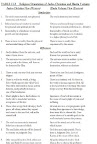
The indigenous Aurobindonian first level framework is adopted for the remainder of this paper for obvious reasons. To start off, the religious-philosophical ideals, upward will and aspirations of the primary Indian culture (also called Hindu, Sanatana or Vedanta) are presented in Table 11.3 below. Also noted in the table are contrasts from the western (Judeo-Christian) conceptions, which further helps to describe and distinguish the value framework in India for which appropriate OD interventions need to be envisioned. For, as noted earlier, the notions of OD evolved in the backdrop of the Judeo-Christian paradigm.

From Tables 11

From Tables 11


In order to derive implications from Table 11.3 for individual behavior in organizations it would help to take into account additional anchoring notions of Hinduism as described by a number of scholars (Ajaya, 1983; Brown, 1990; Das, 1989; Jacobs, 1961; Kenghe, 1972a, 1972b; Rama, Ballentine and Ajaya, 1976). The concepts of self, body, external world, and interpersonal relationships are unique in the Hindu orientation. It is held that the body is not the real person, but only an outer shell or clothing, and has a higher mission than just being a means of sensual experience. So an individual is enjoined to think that he has a body, but he is not the body; he has emotions, but he is not the emotions; that in his core, he is pure consciousness. The core is the inner spirit of the person, the-essential self. Death brings an end to the body, but not to its real core or atman. This inner self is accorded the highest importance as revealed by the following hymn. 'The spirit within me is smaller than a mustard seed; the spirit within me is greater than this earth and the sky and the heaven, and all these combined.'

The same atman is perceived to be at the core of all other lives and it is conceived that there is a fundamental and natural commonalty and equality amongst all human beings; there is no diversity, no real differences, all are the same, all are one. Ideal fife is a process of extending the self outward so that one is able to consider all others as equally dear, equally worthy, where one sees oneself in all others and regards all others the same as oneself. In other words, life is a process of becoming non-egotistical, equanimous and stable minded. Equanimity is the mental quality of accepting success and failure evenly without becoming elated by success or depressed and disappointed by failure. The important thing is to perform one's tasks and roles with a sense of service, dedication, joy, and without getting attached to expectations or be overly concerned with the outcomes.

Ideal life also places emphasis on non-violence and non-injury to others. An edict says, 'wound not others, nor injure by thought or deed; utter no word to pain thy fellow creatures.' The ideal fife is one of voluntary simplicity and a conservation minded enjoyment of wealth. Artha, kama, dharma and moksha are considered to be the major needs or life goals. Artha refers to basic economic necessities and worldly possessions. Kama refers to sensual pleasures and enjoyment of life. Dharma refers to ethical conduct in the pursuit of artha and kama. The fourth goal moksha refers to the universal desire for happiness, peace, and freedom or release from the limitations and difficulties of life. In addition it may be noted that there is also an ecological perspective – living with needs, eschewing wants, imbedded in the ideal life style.

Dharma is a complex concept. There is no single English word that is equivalent. Dharma means ethical conduct, law, duty, or path. Each person has to follow his or her dharma according to his/her essential nature. Following one's own dharma means 'being true to oneself'. The scriptures provide the injunction that it is better to do one's own dharma imperfectly than to do another's dharma, however well discharged -- ‘Better is death in one's own dharma, the dharma of another is fraught with liability.' One has to discern what one's nature is. Then, having acted according to one's dharma, one has to bear the consequences of one's actions. 'As one acts, as one conducts oneself, so does he/she become.' Thus, a person is regarded as the creator of his own fate. He cannot escape from the effects of his prior deeds; but he can influence his future by his thoughts and deeds in the present.

Pious life (religious living) may be pursued according to one of the four life anchors – jnana, or the path of analytical intellectuality; bhakti or the path of image worship and devotion; karma, or path of selfless service to others; and yoga, the disciplined and step-wise path of which there are many. Individuals are free to pursue any one or any combination of these. Pursuing a chosen life anchor is the way to break out of maya which is a veil of darkness or ignorance which makes one concentrate on mere form rather than substance, on illusions rather than reality.

In the light of the above description of the Indian psycho-philosophy, we can now ask what the implications are of the Vedantic values and world view (Table 11.3 below) for organizational change and OD. Devoid of the religious connotations and objectives they seem to suggest the following: persons are not too different from each other; social distances and differences are only apparent and superficial; there is a fundamental equality amongst all people; perception of differences is due to ignorance; one reaps what one sows because of the cause-effect chain; one has the key to open the door to one's own future; change is inevitable and inherently positive; growth takes place by going inward and seeking to better oneself as a person; ethical and moral conduct is not only desirable but necessary; ignorance, not evil intentions, is the cause of erroneous behavior; the 'present' or 'here and now' is as important a determinant of the future as the past has been a determinant of the present; enhancing one's own growth and development is both acceptable and desirable; emotion laden as well as intellectual-analytical methods are acceptable and valid in the pursuit of one's growth and development.

What do these mean for organizational change and change agents? The notions of inquiry, investigation, introspective self-examination, and pursuit of personal growth towards perfection are fundamental to the Indian Vedanta framework. Learning, growth, and change are acceptable. Since the core beliefs in their details are complex and may even be contradictory, and especially because the principle of equifinality appears to be an integral part of the belief system, it may be difficult for change agents to suggest a particular technique or method as the appropriate one in a given situation. Because of the beliefs that time is endless and cyclical and that growth and change occur over an extended period of time, it may also be difficult to convince that timely action is necessary and important.

Although the way of life advocated by religion is still aspired to by a vast majority of Indians, in actual practice, however, there is a lag effect. For a great majority, the social self's extension outward is limited, going no farther than the in-group (extended family, caste group, etc.). The out-groups consist of others toward whom one tends to be indifferent, irresponsible, or even exploitative. This lag between what is valued and what is practiced may in part be due to the 'present times' scarcities of the basic necessities of life that focus attention on short-term survival realities. Partly, it may also be a residual mental set of inferiority, uncertainty and anxiety resulting from centuries of external domination first by Muslim invaders and then by European colonial rulers. On the positive side, there is emotional support from the in-group, both in times of happiness and misery. There is affection and care of subordinates who reciprocate with respectful compliance. Relationships are not temporary or merely contractual. Contacts, connections, and attachments are very important. People are not only means but are also supportive anchors during times of emotional distress (Verma, 1987). It is indeed remarkable that the ancient value system still holds sway over a population that has not experienced much long term social stability.

Table 11.3 here


Thus, the values stemming from the religio-philosophical origins appear to be sufficiently facilitative of OD interventions. Nurturing feminine values, concern for maintenance behavior, importance of doing one's best, reality recognition, and stress preparedness (in the sense of accepting that results may be influenced by extraneous conditions) are all supportive of change and growth. However, confrontation in a face-to-face situation is not valued. But the expression of emotionality appears to be acceptable. Emotional release may be orchestrated in a non-confrontational way through the process of self-examination for growth and development which the value system seems to permit. Confrontations connote public defrocking with accompanying embarrassment, loss of face, and dignity.

The in-group vs. out-group feelings may be more of a problem. The strong group loyalty has a potential for groupthink errors in decision-making. Some of the other factors include individuals willing to forego task relevant behaviors so as to maintain a relationship. The focus on maintaining relationships also leads to a certain degree of hypocrisy, an unwillingness to make one's stand clear on any issue, because of the risk of alienating relationships. The self thrives on the care and concern shown by the in-group, and is almost ineffective in handling demanding situations independently. Such a social self may undermine autonomy, initiative, and individualism. Often, excessive expectations are placed on those in the subordinate role. Asking and giving are highly emotional and one is likely to feel disappointed and hurt if ignored. In addition, inequality, injustice, exploitation, and cruelty are usually expressed toward members of the out-group (Verma, 1987).

Kanungo (1990) has noted that workplace commitment may be because of the paramount importance attached to family well-being, work is important only for making and maintaining people connections. Altruism may lead to inappropriate sacrifice of self interest to the benefit of incompetents. Equanimity may be erroneously equated with acceptance of undesirable statusquo or unconcerned mechanical behavior. Such misunderstanding or misreading of cultural norms and messages is possible under certain conditions. To an extent such misunderstanding may also be a reaction and defense towards prevailing workplace conditions.

OD practitioners need to work around such defenses and educate and interpret cultural injunctions, scriptural passages, mythology, and religious injunctions. Thus, a change agent in India cannot afford to be ignorant of its psycho-philosophy, religion and mythology. If consequences are clearly spelled out to the people, if analogous situations from the cultural background are juxtaposed, realistic, constructive and creative behavior is likely to follow. The religious-philosophical injunctions repeatedly emphasize adherence to truth and right conduct. 'Satyam vadishyami, dharmam karishyami' means 'I will pursue truth, I will act according to dharma.' Such injunctions can be drawn upon as reasons for introducing change and attempts to improve the quality of work life for all concerned.

The next section that goes on to explore and examine whether the Hindu/Indian culture is conducive to organizational development and revitalization is posted separately with its section heading AN INDIAN PARADIGM FOR INTRODUCING CHANGE. It introduces and elaborates the age old mode of ekottaropaya (in English, the technique of just-one-more).

But for now, from what has been said above the question I would like to pose my compatriots is whether Hindu/Indian organizations – whether profit or non-profit, whether religious or secular, whether in India or outside India – have appropriate mindsets that are conducive to organizational and personal growth and change or betterment. I would appreciate if you will use the comments section below to pen your thoughts and share with others. Here is how you can do so:

Just below this posting there is a under lined word ‘comments’ Click that word, and the box for your comments opens. If there are any comments already, then the box for your comments will be at the bottom of them all. You pen your thoughts in the box. At the bottom of that comment box is a small box with an arrow next to it. Click the arrow, for your choice of whether you want your email address to appear under your comments, or just anonymous. Then clique DONE.

Excerpted and somewhat rephrased from Kalburgi M. Srinivas. Organization Development: Maya or Moksha. Pp 248- 282, Chapter 11 in Work Motivation: Models for Developing Countries, Edited by R.N.Kanungo and M. Mendonca, Sage Publications, 1994. If interested you may read the original chapter that first talks about developing countries and contexts prior to the above section on India.

Labels: , ,

Saturday, February 2, 2008

Passivity as a national character


Jagannathan, R. Passivity as a national character Wednesday, India.com/DNA Analysis.
13 February 2008

If there is one country where individuals can make a difference, it is India. I don’t mean this in the sense it is normally understood; I am saying it cynically.

If there is one country where individuals can make a difference, it is India. I don’t mean this in the sense it is normally understood; I am saying it cynically. As a people, we are so absorbed with ourselves, that if anyone seriously wants to change things around — for better or worse — people will let him do so.

A few vested interests may  oppose him or her some of the time, but if the individual bares his fangs, the  opposition usually dissolves.

It took only one Seshan to clean up the electoral system. It took only one Indira Gandhi to launch and rescind the Emergency. It took a meek Manmohan Singh to launch economic reforms in the country.

It took only one T Chandrashekhar  to clean up Thane and Nagpur. It took just a Dhirubhai Ambani to create the equity cult in India.

One Narendra Modi managed to clean up the administration in Gujarat to make it more efficient and growth-oriented. One determined Teesta Setalvad is able to get the courts to start booking the rioters of 2002.

It takes only one public interest litigation to force a policy change in favour of cleaner fuel or to demolish unauthorized structures in Delhi. Equally, it may take only one politician or thug to reverse the whole process.

On the negative side, the state recedes at the slightest hint of public protest. One statement from Raj Thackeray is enough bring out the goons, with the police doing little to stop the roughing up of people of north Indian descent. It took only one small demonstration by zealots in Kolkata to send Taslima Nasreen packing, forcing her to rewrite her books. It took only some threats from the Sangh Parivar to send India’s most distinguished painter into exile.

Then, there is the other side of the coin, too. Once the individual who wants to change things disappears from the scene, the old order returns. Exit Chandrashekhar, and Thane and Nagpur are back to garbage on the streets.

Quite simply, passivity and the pursuit of narrow self-interest are core elements of our national character, and this is both the plus and the minus of being Indian. The collective passivity of people makes it easy for determined individuals to push through change without much opposition. It’s easy for both do-gooders and tyrants to get their way here.

In UP, it took a Mayawati to organise Brahmins; the Brahmins never did so themselves.

One reason why terrorists are getting nowhere with their provocations is that Indians have begun to accept periodic blow-ups as part of the landscape. Terror no longer has the ability to shock or force sharp divisions among people, though the politicians try hard to aid the process.

After the Mumbai train blasts, many people thought it would polarise the city on communal lines. It didn’t. The Mecca Masjid blasts, too, didn’t. After a few mandatory rallies and chest-thumping, people went back to work. This is not because Indians are uniquely tolerant —they are uniquely apathetic.

Gandhi’s success during the freedom movement can probably be attributed to passivity. Our freedom struggle demanded little more than non-cooperation with the British, which meant doing little. Any active form of resistance — of the kind espoused by Bhagat Singh or Netaji — drew far fewer supporters.

We continue to revere the Bhagats and Netajis not because we would like to emulate them, but because we feel guilty that we haven’t done what our conscience told us to. Heroic figures like Shivaji come few and far between in India, and that is one reason we celebrate them even more. They compensate for our own passivity. In the end, Indians did not find even Gandhi worth emulating.

The key to unlocking individual and group energies in India is self-interest.

Any leader who can align a group’s self-interest with broader goals will be able to rule uninterrupted in most parts of India. Unfortunately, we have not had too many leaders who can match the two objectives.


Labels: , ,